Council rubbish collection in London
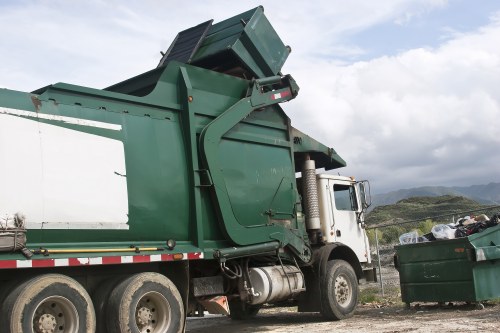
Council rubbish collection in London needs to be clear, organised and suited to the kind of waste being taken away. We provide a practical service for households, landlords, managing agents and businesses that need bulky items, mixed rubbish or scheduled clearance work handled in a straightforward way. The focus is on removing waste responsibly, keeping the process easy to understand and making sure the right items are collected for the right route.
Our council rubbish collection service covers a broad range of everyday waste, from single bulky items to fuller clearances where several items need sorting before removal. If you are comparing options for a larger load, the bulk waste collection page explains a useful wider service area, while council large item collection is a good fit when one oversized piece is the main problem. The aim is simple: choose the collection type that matches the waste, the access and the amount of handling required.
If you need a quotation, use the contact details on the site or request a callback through the enquiry page. See pricing and quotes for the clearest next step when you want to compare the likely cost of different collection types.
What our council rubbish collection covers
The service is built around practical removal of items that are awkward to move, too bulky for standard bins or simply accumulated beyond normal household capacity. That can include broken furniture, white goods, bagged mixed waste, cleared household contents and heavy objects that need careful lifting. In many cases, the difference between a smooth collection and a difficult one is whether the waste is grouped sensibly and whether access is understood in advance.
For people dealing with a few heavy pieces, furniture clearance and furniture disposal are useful related services, especially where sofas, wardrobes, tables or chairs need to be moved without fuss. We also handle specific items through pages such as sofa collection, bed disposal and mattress collection, which helps customers match the collection to the exact item rather than booking a broader clearance unnecessarily.
That said, it is often the wider mix of waste that creates the real planning challenge. A garage tidy-up, loft clearance or home clearance may involve a mixture of rigid items, smaller loose rubbish and a few pieces that need separating before loading. In those cases, a more general route such as rubbish clearance or waste removal may be the most sensible choice, because it gives more flexibility over what can be taken together.
Choosing the right collection for bulky household items

Bigger domestic items usually need more than simply lifting them into a vehicle. They may need to be carried from an upstairs room, dismantled, moved through narrow halls or protected while being taken from a flat or maisonette. The collection method matters because the same sofa, bed base or wardrobe can present very different access issues depending on stairs, parking and whether the item can be taken apart beforehand. A careful approach keeps the job organised and reduces the risk of delay.
Sofa removal, mattress disposal and fridge disposal each suit a different kind of bulky waste, and these dedicated pages are useful if the main concern is a single item rather than mixed rubbish. White goods and appliance collections can also involve recycling considerations, which is why white goods recycle and large item collection are practical options to review when the load is substantial or includes reusable materials.
Useful decisions often come down to three things: what the item is, where it is located and how much handling it needs before loading. Lift access, parking and internal access can all affect the collection method. If the waste is partly recyclable, partly general rubbish, or made up of several different item types, we can usually help you work out whether one targeted collection or a broader clearance is the better fit.
Clearances for rooms, outbuildings and mixed waste
Not every request is about one large item. Many customers need a fuller clearance where accumulated waste has gathered in a garage, loft, spare room, shed or office. These jobs are usually less about a single object and more about sorting the contents into sensible groups so that removals are efficient and the right waste route is used. Mixed clearances are often more manageable when the customer has a basic idea of what stays and what goes, but the service is designed to cope with a reasonable amount of sorting on site too.
Garage clearance, loft clearance, home clearance and house clearance each describe a distinct type of work, and it is worth choosing carefully rather than booking a generic removal for everything. For flats and smaller properties, flat clearance can be the best match when internal access is tight, while office clearance is more relevant where desks, chairs, archived materials or workplace furniture need to be removed in an orderly way.
- Garage and loft jobs often include a mix of stored belongings, packaging and obsolete household items.
- Flat clearances may need more care around shared entrances, stairwells and timing.
- Office clearances benefit from separating furniture, paperwork and reusable equipment.
Waste types and collection routes
Different waste streams suit different handling methods, and that is one reason why a council rubbish collection service should not be treated as a one-size-fits-all task. Garden waste, builders’ waste and general household rubbish can all be collected under the wider umbrella of removal, but each needs a different level of attention to sorting, loading and disposal. Clear information about the material helps avoid waste being put into the wrong channel.
Garden clearance is a sensible choice for cuttings, branches, soil-filled waste bags and other outdoor material that builds up after maintenance work. For building and renovation debris, builders waste clearance provides a more suitable route, while waste collection and waste disposal are useful when the job is mainly about taking away a set volume of mixed rubbish and ensuring it is dealt with properly afterwards.
Some items need a more specific route because of their size, material or disposal requirements. For example, beds, mattresses and large furniture often need dedicated handling, and white goods may need recycling checks before collection. That is why we encourage customers to think in terms of the item type rather than only the room it came from. A more precise match can keep the collection straightforward and reduce unnecessary handling.
Planning a collection that works on the day
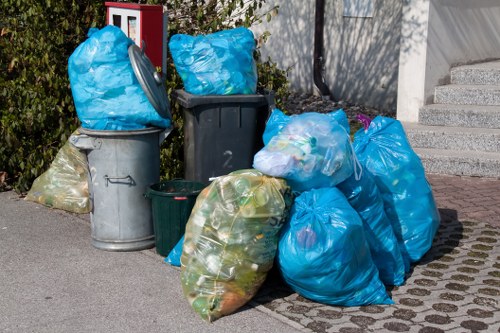
A well-planned collection usually starts with the waste itself: what needs to go, what can stay, and whether anything is too heavy, awkward or fragile to leave loose. That information helps shape the most suitable collection method. It is also useful to think about access, parking and the order in which items are likely to come out, especially if bulky waste is mixed with smaller bags or loose objects. The clearer the picture, the easier it is to choose the right service.
Two simple things make a big difference. First, group the items if you can, even if only broadly by room or by type. Second, tell us about any stairs, basements, shared entrances or narrow outdoor access so that the collection can be matched to the property. If you are unsure what counts as bulky waste, the general pages for waste removal and waste clearance are helpful starting points before you move on to a more specific service page.
For customers comparing the cost of different options, it usually helps to look at the scope of work rather than only the headline description. The volume of rubbish, the number of heavy items, the time needed for loading and the disposal route can all influence the quotation. More specific information normally leads to a more accurate estimate. You do not need a perfect inventory, but a sensible outline of the waste is valuable.
Business and managed-property collections
Council rubbish collection is not only for homes. Shops, offices, landlords and managing agents may also need waste removed when premises are changing use, equipment is being replaced or a property needs clearing between tenancies. Commercial jobs can involve furniture, bagged waste, old stock, archive materials or mixed items from a small refurbishment, so the work has to be organised around access, timing and the type of waste involved.
Business waste removal is the strongest fit where the property is used for work and the waste comes from ongoing operations. When the project is more about emptying a workplace or storage area, office clearance or rubbish removal may be more appropriate. For a more general service that still deals with substantial quantities, bulky waste collection is another helpful page to review before deciding how broad the collection needs to be.
Commercial collections often need a little more co-ordination than household ones because doors, corridors, loading points and building rules can all affect the job. If the waste includes items that can be separated for recycling, that can also shape the collection plan. Keeping the request focused on the actual waste type and access conditions makes it easier to compare options and choose a sensible route.
About London
London is a large and historically layered city shaped by the River Thames, a patchwork of former villages and settlements, and centuries of change through trade, governance and expansion. Its geography is varied rather than uniform: the central districts cluster around the river and older streets, while the outer boroughs contain broad residential areas, parks and town centres that grew around railways, roads and industry. The city’s identity is closely tied to a combination of national institutions, local markets, theatres, museums and civic landmarks, but it is equally defined by its everyday streetscapes, from terraces and mansion blocks to post-war estates and newer developments. Historic areas such as the City, Westminster and Southwark sit alongside districts that preserve traces of earlier suburban growth, former manor lands and village greens. The Thames remains a powerful organising feature, crossed by bridges that connect commercial quarters, government buildings and cultural destinations. Green spaces are also part of the city’s character, with large royal parks, commons and smaller neighbourhood open spaces providing contrast to dense urban streets. Transport networks have long helped shape the city, and the Underground, rail termini, buses and river crossings all contribute to its movement and rhythm. Architecture ranges from medieval survivals and Georgian squares to Victorian civic buildings, modern towers and carefully restored warehouses, giving the capital a layered appearance that reflects continuous reinvention. Cultural life is similarly broad, with theatres, galleries, music venues, community festivals and local institutions contributing to the city’s public life. In this way, London is both a global capital and a collection of distinctive districts, each with its own streets, histories and everyday character.
If you need a clear quotation for a council rubbish collection or a related bulky waste job, start with the most relevant service page and use the enquiry details available on the site. A short outline of the items, access and collection type is usually enough to begin.
Common item-specific collection choices

Many customers know exactly which item is causing the problem, even if the broader collection method is still undecided. In those cases, a more focused service page is usually the best place to start. Single-item collections are often simpler to plan, and they can avoid paying for a broader clearance when the job is limited to one or two objects. That is especially true for furniture, appliances and mattresses, which may need different handling from ordinary rubbish.
You may find these pages useful: mattress disposal, furniture collection, waste disposal and waste collection. Where recycling is a consideration, especially for fridges, washing machines or similar household items, white goods recycle can help match the item to the right route. For more general household items, the choice often depends on whether the work is straightforward lifting or a fuller clear-out involving several rooms.
For a prompt quotation, it helps to say what is being removed, how many items there are and whether they are already grouped together. Those simple details make it easier to identify the most relevant service and avoid unnecessary back-and-forth. If the waste is spread across the property, a short note about the rooms involved is usually enough to get the process moving in the right direction.
Recycling, disposal and sustainability
The final route for collected waste depends on what the material is made of and whether any parts can be recovered, reused or recycled. A responsible collection service should not treat every item the same, because wood, metal, textile, plastic and electrical items may need different handling. The practical aim is to remove the waste efficiently while keeping disposal aligned with the item type and the relevant processing route.
That is why pages such as recycling and sustainability, fridge disposal and white goods recycle matter alongside the core rubbish collection service. They help show how certain items may be separated from general waste and directed through a more suitable process. If you are dealing with a mixed load, it can be useful to think about what is reusable, what is recyclable and what must be disposed of as general rubbish.
For clearances involving several item types, the best result usually comes from matching the waste to the right route from the start. That does not require a detailed technical list, only a sensible description of the materials and quantities involved. A good enquiry tends to save time because it avoids unsuitable assumptions and lets the collection be planned on practical terms.
How to request a quotation

If you are ready to arrange council rubbish collection in London, the next step is to choose the page that most closely matches your waste and send a concise request. Mention the collection type, the main items, any bulky pieces and whether access is straightforward or limited. If the waste is mixed, say so. If the job is linked to a move, refurbishment or tenancy change, that can be included too, as it helps define the scope.
Useful service pages for quotation requests include pricing and quotes, contact us, council waste collection and rubbish removal. Choose the one that best reflects the work in hand, then provide the key details in your enquiry. Plainly stated information about quantity, item type and access is usually enough to start the process without delay.
When you are ready, make your enquiry and ask for a quotation in the way that suits you best. Use the most relevant page, describe the waste clearly and request the price you need. That simple approach helps the collection be assessed properly and keeps the conversation focused on the actual job rather than guesswork.