 Modern Slavery Statement ??? Council Rubbish Collection
Our Council Rubbish Collection operations are committed to upholding human rights and eliminating forced labour across the municipal rubbish collection supply chain. We set a clear expectation that everyone who works for or with our local council rubbish collection services must be treated fairly, with dignity and respect. This statement explains our policies, actions and ongoing commitments to reduce the risk of modern slavery in council waste collection and associated services.
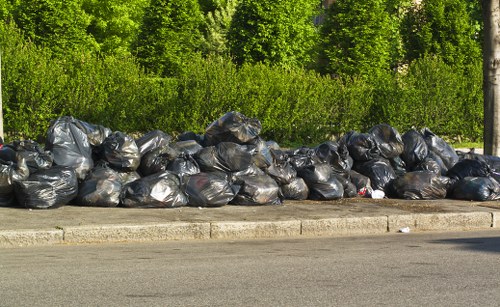 We operate a zero-tolerance policy towards all forms of modern slavery, including forced labour, human trafficking and debt bondage in any part of our council refuse collection activities. That policy applies to our employees, contracted workers and subcontractors providing council waste collection, street cleansing and related municipal services. Any credible allegation will lead to immediate investigation and proportionate action, up to termination of contracts and referral to the appropriate authorities.
Policies, Contract Terms and Supplier Requirements
We embed anti-slavery provisions into procurement documents, and every supplier to our council refuse collection program must certify compliance with our standards. Our procurement terms include mandatory clauses that require suppliers to declare labour practices, provide evidence of worker protections and allow inspection. We maintain a formal procurement policy for council waste collection that is regularly reviewed and updated to reflect evolving legal standards and best practices.
![A close-up view of multiple tightly tied white plastic rubbish bags, arranged in rows, with some showing slight sheen and creases on their surface. The bags appear to be filled with waste, creating a full, rounded shape, and are placed outdoors on a flat surface, possibly a driveway or pavement, near a building or storage area. The background is slightly blurred, emphasizing the collection of refuse bags with minimal environmental context visible. The scene suggests a large-scale rubbish collection or disposal process, consistent with services offered by Council Rubbish Collection in local towns or suburbs. The lighting is natural, highlighting the glossy texture of the plastic and the uniformity of the tied knots at the top of each bag, reinforcing the professional handling of waste disposal services across the region, including areas around [POSTCODE] and nearby localities.](/pub/_photos/rubbish/f1390628864.jpg) Supplier due diligence in our municipal rubbish collection network includes pre-award checks and ongoing monitoring. We conduct risk-based assessments covering geographic risk, labour intensity, subcontracting layers and sector vulnerabilities. Where risk is identified we require corrective action plans and may withhold new awards until remedial steps are completed. Key due diligence steps include:
Supplier due diligence in our municipal rubbish collection network includes pre-award checks and ongoing monitoring. We conduct risk-based assessments covering geographic risk, labour intensity, subcontracting layers and sector vulnerabilities. Where risk is identified we require corrective action plans and may withhold new awards until remedial steps are completed. Key due diligence steps include:
- Verification of payroll and working hour records for crew and contract staff;
- Review of recruitment practices to prevent deceptive or fee-based hiring;
- Checks on subcontractors used in the council waste collection supply chain.
Supplier Audits and Monitoring
We operate a programme of supplier audits for high-risk providers of local council rubbish collection services. Audits are a mix of desktop reviews and on-site inspections conducted by our compliance team or independent auditors. Audit findings are documented and accompanied by required corrective actions with clear deadlines. We treat severe breaches as grounds for contract suspension or termination, and we will not tolerate exploitation within any part of our municipal waste services.
 Reporting channels are available to everyone involved in the council refuse collection ecosystem. Staff, contractors and members of the public can raise concerns through multiple confidential mechanisms. We promote whistleblowing protections and ensure that reports are taken seriously, investigated promptly and handled with confidentiality. Our reporting options include internally managed hotlines and secure electronic reporting tools that preserve anonymity where requested.
![Three cylindrical outdoor rubbish bins are positioned on a well-maintained grassy area, each with a black, vertical, slatted plastic body and a rounded, brightly coloured lid in blue, yellow, and green respectively. The lids feature two small openings for disposal, with the blue-lid bin's front partly visible, and the yellow and green lids seen from the side, slightly overlapping in a line. The bins are placed on a concrete or paved surface adjacent to the grass, with no visible signage or labels. The background shows lush green grass, indicating a residential or community outdoor setting, with natural daylight illuminating the scene. The bins are part of a waste management service provided by Council Rubbish Collection, serving areas around [POSTCODE] and the town near [TOWN], supporting local rubbish disposal needs. The image emphasizes public refuse disposal infrastructure suitable for local rubbish collection services within the UK.](/pub/_photos/rubbish/f1344962560.jpg) We encourage early reporting of suspected slavery or labour abuse. All allegations are triaged by a specialist team, assessed for immediate risk to any individuals and escalated as necessary. When investigations identify labour exploitation we will cooperate with remediation partners, law enforcement and statutory agencies, and pursue civil or contractual remedies against responsible parties. Our approach is victim-centred, prioritising safety and access to support.
We encourage early reporting of suspected slavery or labour abuse. All allegations are triaged by a specialist team, assessed for immediate risk to any individuals and escalated as necessary. When investigations identify labour exploitation we will cooperate with remediation partners, law enforcement and statutory agencies, and pursue civil or contractual remedies against responsible parties. Our approach is victim-centred, prioritising safety and access to support.
Training for our workforce and for contractors in the council waste collection sector is mandatory for staff in procurement, contract management and frontline operations. Training includes recognition of modern slavery indicators, correct use of reporting channels and the obligations embedded in council waste collection contracts. We also require suppliers to provide equivalent training to the staff who work on your municipal rubbish collection services under their control.
We will continue to invest in supplier engagement, audit capacity and remediation resources to strengthen our overall compliance framework. Our continuous improvement approach seeks to reduce risk across the entire council refuse collection supply chain, including recruitment intermediaries and seasonal labour segments that can be vulnerable to exploitation.
As part of our governance, this Modern Slavery Statement for council rubbish collection will be reviewed annually to assess effectiveness, update risk mapping and publish any significant remediation actions or policy changes. The review will include audit outcomes, training metrics, reports received through our reporting channels and any contractual changes required to maintain a zero tolerance approach to modern slavery in local council rubbish collection activities.