Preparing Hazardous Household Waste for Collection
If you've ever stared at a leaking bottle of paint stripper, an old tin of garden chemicals, or a pile of half-used batteries and thought, "Right, what now?", you're not alone. Preparing hazardous household waste for collection is one of those jobs that sounds simple until you're standing in front of the cupboard, trying to remember what can be mixed, what must be sealed, and what absolutely should not go in the normal bin. Done properly, it protects your home, the collection team, and the environment. Done badly, it can create spills, fumes, contamination, or a collection refusal.
This guide explains how to sort, secure, label, and present hazardous waste so it's ready for collection. You'll also see the common mistakes to avoid, a practical checklist, and how this fits alongside other household waste services such as general waste collection, rubbish removal, and specialist services like fridge disposal or white goods recycling when the item is no longer safe to keep.
By the end, you'll know how to prepare hazardous household waste with confidence, without overcomplicating it. Truth be told, most of the work is just careful sorting and sensible packaging.
Table of Contents
- Why Preparing Hazardous Household Waste for Collection Matters
- How Preparing Hazardous Household Waste for Collection Works
- Key Benefits and Practical Advantages
- Who This Is For and When It Makes Sense
- Step-by-Step Guidance
- Expert Tips for Better Results
- Common Mistakes to Avoid
- Tools, Resources and Recommendations
- Law, Compliance, Standards, or Best Practice
- Options, Methods, or Comparison Table
- Case Study or Real-World Example
- Practical Checklist
- Conclusion
- Frequently Asked Questions
Why Preparing Hazardous Household Waste for Collection Matters
Hazardous household waste is different from ordinary rubbish because it can be flammable, toxic, corrosive, sharp, pressurised, or otherwise harmful if handled badly. A cracked aerosol can may leak propellant; a bottle of bleach may react with other products; an old lithium battery may overheat if short-circuited. Even small domestic items can cause outsized problems once they're loose inside a bag or tipped into a container with other waste.
Preparation matters because the collection process depends on predictable handling. If waste is cleanly separated, sealed, and identified, the collector can transport it safely and pass it to the right treatment route. If it arrives unlabeled, mixed, or actively leaking, it may need to be refused or repackaged on the spot. That creates delays and extra risk for everyone involved.
There's also a wider environmental reason. Many hazardous items contain materials that can be recovered, neutralised, or processed properly only when they are kept apart from general rubbish. One contaminated bag can affect a larger batch of recyclable or recoverable material. If you're already organising a broader clear-out, it can help to separate hazardous items before arranging other services such as home clearance or house clearance, so the risky stuff does not get bundled in by accident.
Expert summary: The safest collection is the one that starts before collection day. Sort early, keep materials separate, and use packaging that contains the risk rather than spreading it around.
How Preparing Hazardous Household Waste for Collection Works
The basic process is straightforward: identify the item, check that it belongs in hazardous waste, make it safe to move, package it so it can't leak or break, and present it in the right way for collection. The details change depending on the item, but the logic stays the same.
What usually counts as hazardous household waste?
Typical examples include batteries, fluorescent tubes, paint, solvents, garden chemicals, pesticides, bleach, cleaning chemicals, aerosols, engine oil, certain adhesives, asbestos-containing materials, and some electrical items with hazardous components. Not every unpleasant item is hazardous in the strict sense, though. A broken chair, for instance, is more likely to need furniture disposal or furniture clearance rather than hazardous waste handling.
What collectors are looking for
Collectors want waste that is:
- separated by type
- securely closed or contained
- stable enough to carry without tipping or crushing
- clearly identifiable
- not mixed with food, liquids, or general rubbish
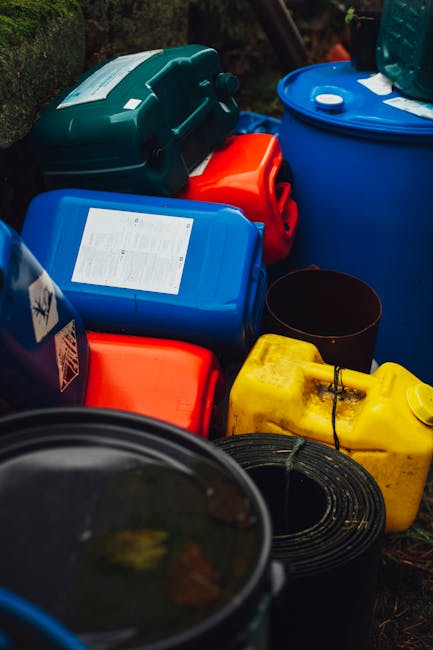
In practice, that means no loose batteries in a kitchen drawer, no half-open paint tins balanced in a carrier bag, and no mystery bottles with faded handwritten labels that nobody can decipher. If you can't confidently identify it, treat it cautiously and seek guidance before moving it.
Why collections sometimes fail
Common reasons include leakage, incompatible materials packed together, overfilled containers, missing lids, broken packaging, or items left out too early where they can be disturbed. For larger clear-outs, the same logic applies to bulky waste and mixed junk; a clean sort makes a big difference whether you are organising bulky waste collection or a broader waste removal job.
Key Benefits and Practical Advantages
Good preparation does more than tick a box. It saves time, reduces risk, and makes the whole collection smoother from start to finish.
- Safer handling: Well-contained waste is less likely to leak, break, or react during lifting and transport.
- Fewer collection problems: Correctly prepared items are less likely to be rejected or left behind.
- Cleaner storage at home: Proper packaging stops odours, stains, and accidental contact while you wait for collection.
- Better environmental outcomes: Hazardous materials can be processed through the right route instead of contaminating general waste.
- Less stress on collection day: A tidy set-out makes the handover quick and straightforward.
There's a practical household benefit too. Once you've dealt with hazardous items properly, the rest of the decluttering becomes easier. People often start with one awkward tin of old chemicals and end up finally clearing the garage, loft, or under-sink cupboard. That domino effect is not a bad thing.
If your hazardous items are part of a bigger clear-out, services such as garage clearance, loft clearance, or rubbish clearance can help you separate the ordinary waste from the items that need more care.
Who This Is For and When It Makes Sense
This topic matters to almost any household, but it becomes especially relevant in a few common situations.
Homeowners and tenants doing a clear-out
If you're moving house, renovating, spring cleaning, or emptying an inherited property, hazardous items often turn up in forgotten cupboards, garages, or sheds. They're easy to overlook until the last minute. That's exactly when planning starts to matter.
Families with children or pets
Households with children or animals need extra caution because even a small spill or dropped container can become an immediate hazard. A sealed box of cleaning chemicals stored on a shelf is one thing; a half-open bottle in reach of a curious dog or toddler is another.
Older properties and long-term storage areas
Older homes often contain leftover DIY products, decorative paints, varnishes, and garden treatments purchased years ago. These items may still be sealed, but the labels, caps, and containers may be degraded. If that sounds familiar, you may be closer to needing a proper disposal plan than you think.
People replacing appliances or fixtures
Some appliance removals involve residue or associated waste that needs special handling. For example, if you're replacing a fridge or freezer, the appliance may need a dedicated route such as fridge disposal. If the task is part of a broader kitchen or utility-room refresh, a service like white goods recycle may be the more suitable next step.
When does it make sense to arrange collection? Usually when you have enough waste to justify the trip, when items are no longer safe to store, or when the waste is too awkward or risky to transport yourself. If in doubt, choose caution. Chemicals do not improve with age.
Step-by-Step Guidance
The safest way to prepare hazardous household waste is to move in a calm, ordered sequence. Rushing is what causes spills and confusion.
- Identify each item properly. Read the label, check the container, and separate anything you are not sure about.
- Sort by type. Keep batteries, paints, aerosols, chemicals, oils, and sharp items apart unless you have explicit guidance to combine them.
- Check for leaks or damage. If a container is split, stand it upright in a second container or tray that can catch drips.
- Keep original labels where possible. Do not peel them off unless the container is already being repackaged and the new label is clear.
- Secure the lids. Tighten caps, close lids, and tape them only if the material and surface allow it safely.
- Use suitable secondary containment. A sturdy plastic box, tray, or lined container can help if something leaks in transit.
- Prevent breakage. Wrap fragile items like tubes or bulbs individually and keep them away from heavy objects.
- Store in a cool, dry, ventilated place. Avoid direct heat, damp corners, or places where items can be knocked over.
- Separate from food and regular rubbish. Never store hazardous items beside kitchen waste or recycling bags.
- Present them as instructed on collection day. Follow the collection provider's placement guidance exactly, especially if items need to be left outside, in a specific container, or handed over in person.
For many households, the most efficient approach is to prepare hazardous waste at the same time as a general room clear-out. If you are clearing a property room by room, services like flat clearance, office clearance, or waste clearance can sit alongside the specialist handling of risky items.
A simple rule that helps
If a container might leak, break, spill, or react, don't rely on one layer of protection. Use two.
Expert Tips for Better Results
The little details make the biggest difference. Most problems with hazardous waste are not dramatic; they are annoying, preventable, and easy to avoid with a few habits.
- Keep a "hazard box" at home: Use one clearly marked container for batteries, small lamps, and similar items so they don't wander through drawers and cupboards.
- Store upright whenever possible: Containers with liquid should generally stay upright unless repackaging makes that impossible.
- Don't overfill secondary containers: Leave room for lids, padding, and safe handling.
- Wrap sharp or fragile items separately: Broken glass, snapped plastic, and shattered bulbs need isolated packaging.
- Use absorbent material for small leaks: Cat litter, paper towels, or other suitable absorbent material can help contain minor drips, but only if safe for the substance involved.
- Take a photo of uncertain items: If you need to ask for advice, a clear photo of the label and container often helps more than a description over the phone.
- Prepare early: Don't leave sorting to the night before collection. That is how odd reactions, mismatched lids, and panic happen.
A useful field habit is to think in layers: the item itself, the container holding it, and the place where that container sits. If each layer is stable, the risk drops sharply.
And yes, one sturdy plastic tub now can save you from three frantic trips later. A small miracle, really.
Common Mistakes to Avoid
Many hazardous waste issues come from well-meant shortcuts. The following mistakes are especially worth avoiding.
Mixing different chemicals together
This is the biggest red flag. Even products that seem similar can react badly when combined. Cleaning products, for instance, should not be poured into one another "to save space". Space is cheap. Safety is not.
Putting loose batteries in a bag with metal items
Batteries can short-circuit if they touch keys, tools, foil, coins, or other conductive objects. Keep them separated and covered where appropriate.
Leaving containers unsealed
Open lids and loose caps are how spills happen during transport. If a container cannot be safely closed, it may need repackaging or specialist advice.
Using weak or unsuitable packaging
Thin carrier bags, damaged cardboard, and unlined boxes are poor choices for anything that can leak or puncture. Use rigid, intact packaging instead.
Hiding damaged items under other waste
This creates a false sense of safety. If a collector cannot see the problem, it can become a handling problem later. Be honest about the condition of the item.
Assuming every unwanted item is hazardous
Some items are just bulky, awkward, or recyclable rather than hazardous. A mattress, sofa, or wardrobe needs the right disposal route, but not necessarily hazardous handling. You may be better served by mattress disposal, sofa removal, or furniture disposal.
Tools, Resources and Recommendations
You do not need specialist gear for every item, but a small preparation kit makes the job much easier.
Useful household tools
- sturdy plastic storage boxes with lids
- tape for securing caps or padding where appropriate
- labels or marker pens for clear identification
- disposable gloves for dirty or dusty items
- absorbent material for minor drips
- old towels or paper for wrapping fragile items
- a torch for checking cupboard corners, garages, and lofts
Where hazardous waste often hides
Look in the places people forget to clean out: under sinks, in garages, on high shelves, in sheds, around loft rafters, and behind garden tools. If you're already planning a bigger declutter, it is sensible to combine this task with services such as garage clearance, loft clearance, or garden clearance.
Choose the right support route
For households with a few small items, a normal council collection or local household hazardous waste drop-off route may be enough. For larger volumes, mixed clear-outs, or time-sensitive jobs, a private collection service can be more convenient. If you're comparing options, start by looking at pricing and quotes so you understand the likely cost and what's included before you book.
Law, Compliance, Standards, or Best Practice
Hazardous household waste should be handled in line with local authority guidance and accepted UK waste-handling practice. Exact collection rules vary by council and by service provider, so it's always sensible to confirm what is accepted, how it should be presented, and whether any items need pre-booking.
From a best-practice perspective, the main principles are consistent:
- do not mix hazardous materials with ordinary household rubbish
- keep containers closed and stable
- retain labels where possible
- store waste away from children, pets, heat, and ignition sources
- follow the collector's instructions on placement and handover
Where electrical items are involved, the relevant route may be recycling rather than general disposal. Where items are bulky but not hazardous, separate services are often the better fit. This distinction is important because it helps prevent contamination and keeps waste moving through the right treatment stream.
It is also worth using providers that are transparent about safety and handling. Pages such as health and safety policy, insurance and safety, and recycling and sustainability help build confidence that the waste will be managed responsibly. If you are booking any kind of removal service, a quick read of terms and conditions and payment and security is time well spent.
Options, Methods, or Comparison Table
Different waste routes suit different situations. The right choice depends on the volume, the type of item, and how quickly you need it gone.
| Option | Best for | Pros | Watch-outs |
|---|---|---|---|
| Local council hazardous waste route | Small volumes, routine household items | Good for a few items; often cost-effective | May require booking and exact preparation |
| Private waste collection | Mixed clear-outs, larger quantities, urgent jobs | Convenient, flexible, often faster | Check what is accepted and how items should be packaged |
| Specialist appliance or item recycling | Fridges, white goods, certain electronics | Appropriate treatment for specific items | Not suitable for chemicals or loose hazardous liquids |
| General rubbish service | Non-hazardous clutter and bulky waste | Good for furniture, bags of rubbish, and room clear-outs | Do not include hazardous items unless explicitly allowed |
For example, an old sofa, a broken bed frame, and a pile of packaging belong in a bulky waste or furniture route. A tin of solvent and a leaking bleach bottle do not. Matching the waste to the route is half the job.
If you're dealing with several types of items at once, you might use a combination of bulk waste collection, bulky waste collection, and a separate hazardous preparation process for chemicals, batteries, and aerosols.
Case Study or Real-World Example
Consider a typical end-of-tenancy clear-out in a London flat. In the kitchen cupboard you find half-used cleaning products, a broken spray can, some old batteries, and a small tin of leftover paint. In the hallway there's also a damaged lamp tube and a bag of general rubbish from the move. None of it is unusual, but all of it needs different treatment.
The sensible approach would be:
- separate the chemicals from the general rubbish
- leave the paint in its original tin with the lid secured
- keep the batteries in a small rigid container away from metal items
- wrap the tube carefully so it cannot break further
- book the bulky items separately if a sofa or bed is also being removed
In this kind of scenario, a homeowner often combines a few services. The hazardous items are prepared carefully, while the furniture goes through bed disposal or sofa collection, and the general clutter is handled through a large item collection or a more general waste disposal route. The result is cleaner, faster, and far less stressful than trying to push everything into one category.
That is the real lesson here: a tidy sort at the start prevents a messy decision at the end.
Practical Checklist
Use this checklist before collection day:
- Have I identified every hazardous item correctly?
- Have I separated chemicals, batteries, aerosols, and sharp items?
- Are all lids closed and containers secure?
- Have I put any leaking items into secondary containment?
- Are fragile items wrapped so they cannot break?
- Are the labels still visible or clearly re-marked?
- Are the items stored away from food, children, pets, and heat?
- Have I kept hazardous waste separate from general rubbish and recycling?
- Do I know exactly where and how to present the items for collection?
- Have I checked any service-specific instructions or restrictions?
If you can tick all ten, you are in good shape. If not, pause and fix the weak point before the collection arrives.
Conclusion
Preparing hazardous household waste for collection is mostly about care, separation, and common sense. You do not need to make it complicated, but you do need to be deliberate. Keep incompatible materials apart, secure all containers, prevent leaks, and follow the collection instructions closely. That approach protects the people handling the waste and makes sure the items reach the right disposal route.
For households managing a full clear-out, it often helps to think in layers: hazardous items first, bulky items next, and ordinary rubbish last. When you line up the right service for each job, the whole process becomes cleaner and much easier to manage.
If you want help with a larger clear-out or need a service suited to mixed waste, you can also explore your options on about us and contact us pages before booking.
Get a free quote today and see how much you can save.
Frequently Asked Questions
What should I do with hazardous household waste before collection?
Sort it by type, keep it in the original container where possible, seal lids securely, and store everything upright in a safe place until collection.
Can I put hazardous waste in the regular bin if it is sealed?
No. Sealed hazardous items still need the correct route because they can leak, react, or contaminate other waste later.
Do batteries need special preparation?
Yes. Keep batteries separate from metal objects, avoid loose storage, and use a rigid container if you are collecting several together.
What if the container is leaking?
Do not handle it casually. Place it upright in a suitable secondary container, keep it away from heat and children, and seek guidance if the leak is significant.
Should I remove labels from old chemical bottles?
Usually no. Labels help identify the contents. If you repackage something, relabel the new container clearly.
Can I mix different cleaning products together to save space?
No. Mixing household chemicals can be dangerous, even when the products seem similar.
Are aerosols classed as hazardous household waste?
Many are, especially if they are pressurised or contain leftover product. Keep them separate and follow the collection instructions.
Can hazardous waste be collected with bulky household items?
Not usually in the same container or bag. Bulky items like sofas, beds, and furniture are normally handled through separate collection routes such as bulky waste collection or furniture collection.
How do I store hazardous waste safely at home?
Keep it cool, dry, upright, and away from food, heat sources, and anything a child or pet could reach. A locked cupboard or stable box is often the safest choice.
What if I am not sure whether an item is hazardous?
Treat it cautiously and do not mix it with general rubbish. If you are unsure, ask for advice before moving or opening it.
Is it worth arranging a private collection for a few small items?
Sometimes yes, especially if the items are difficult to store safely or you are already booking a wider clearance. For a simple price check, start with pricing and quotes.
Do I need to prepare hazardous waste differently in a flat or apartment?
The core steps are the same, but access and storage can be tighter. In smaller homes, neat containment and clear set-out instructions matter even more, which is why flat clearance can be useful for the broader clean-up.
What is the biggest mistake people make?
Mixing different hazardous materials together or placing them in weak packaging. That is the fastest way to turn a manageable job into a risky one.
Where can I find more information about safe handling and policies?
Relevant trust pages such as health and safety policy, insurance and safety, and recycling and sustainability are a useful place to start.